

A Work of Art: Emily's 1940s Liquid Satin Gown
Some dresses find their brides in the most unexpected ways. Emily's came to her through my friend Adele, who once ran a program at the Fair Lawn Library giving vintage dresses new homes: a 1940s gown in liquid satin, finished with the most beautiful soutache detailing.
The Original Gown
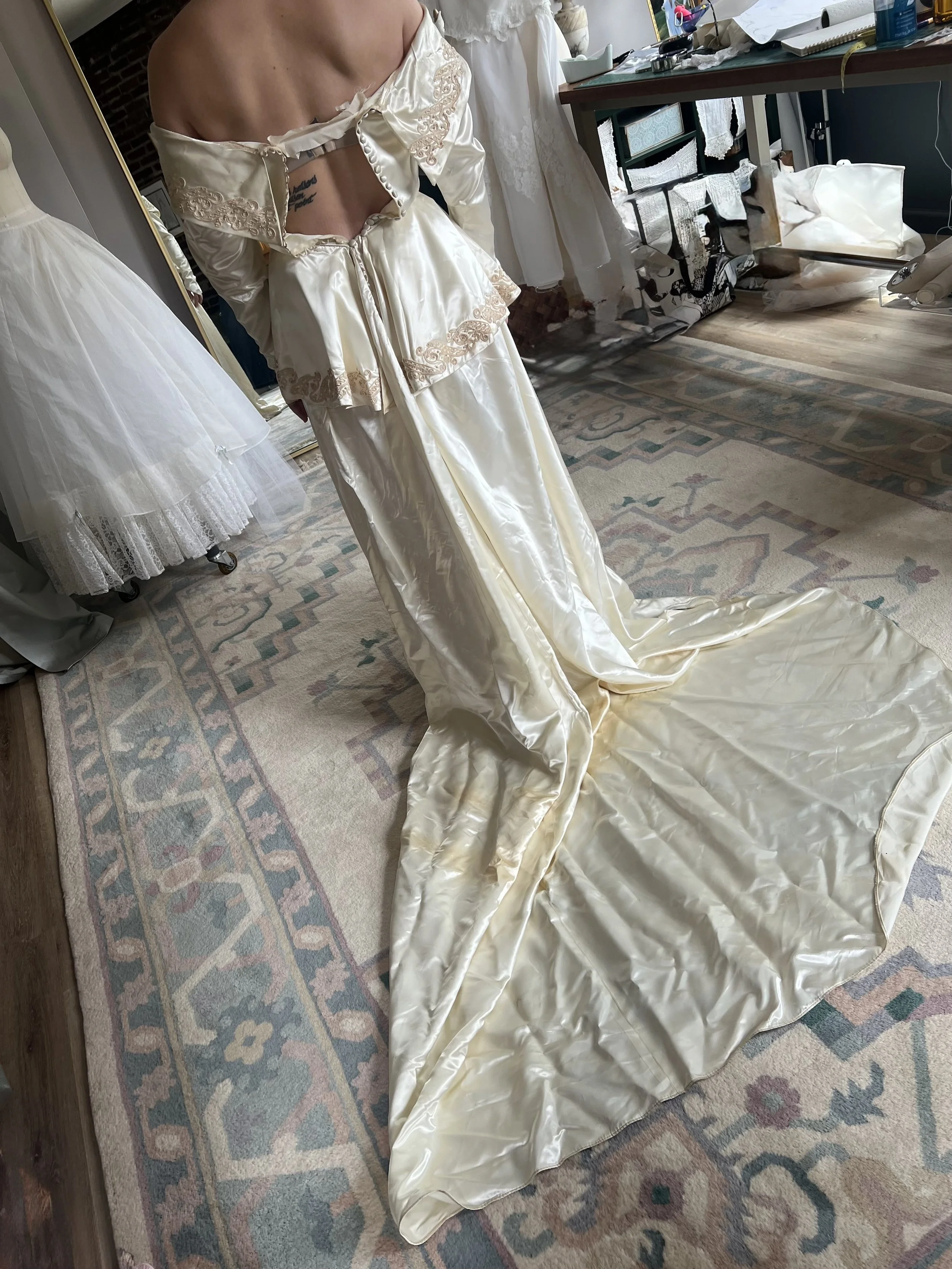
It was a true dress of its decade. It originally had a collar, long sleeves, and a peplum, all embellished with beautiful soutache work. The liquid satin catches light like water, and the soutache, a fine braided cord stitched into looping patterns, spoke to the patience of whoever made it.
Eighty-odd years had left their mark, though. There was fading throughout, and marks scattered across the fabric, especially on the back of the skirt. And the dress didn't fit Emily at all.
The first step was a careful cleaning, a service I offer at the atelier. It made a huge difference. Emily was shocked by how beautifully her dress brightened.
Emily's Vision
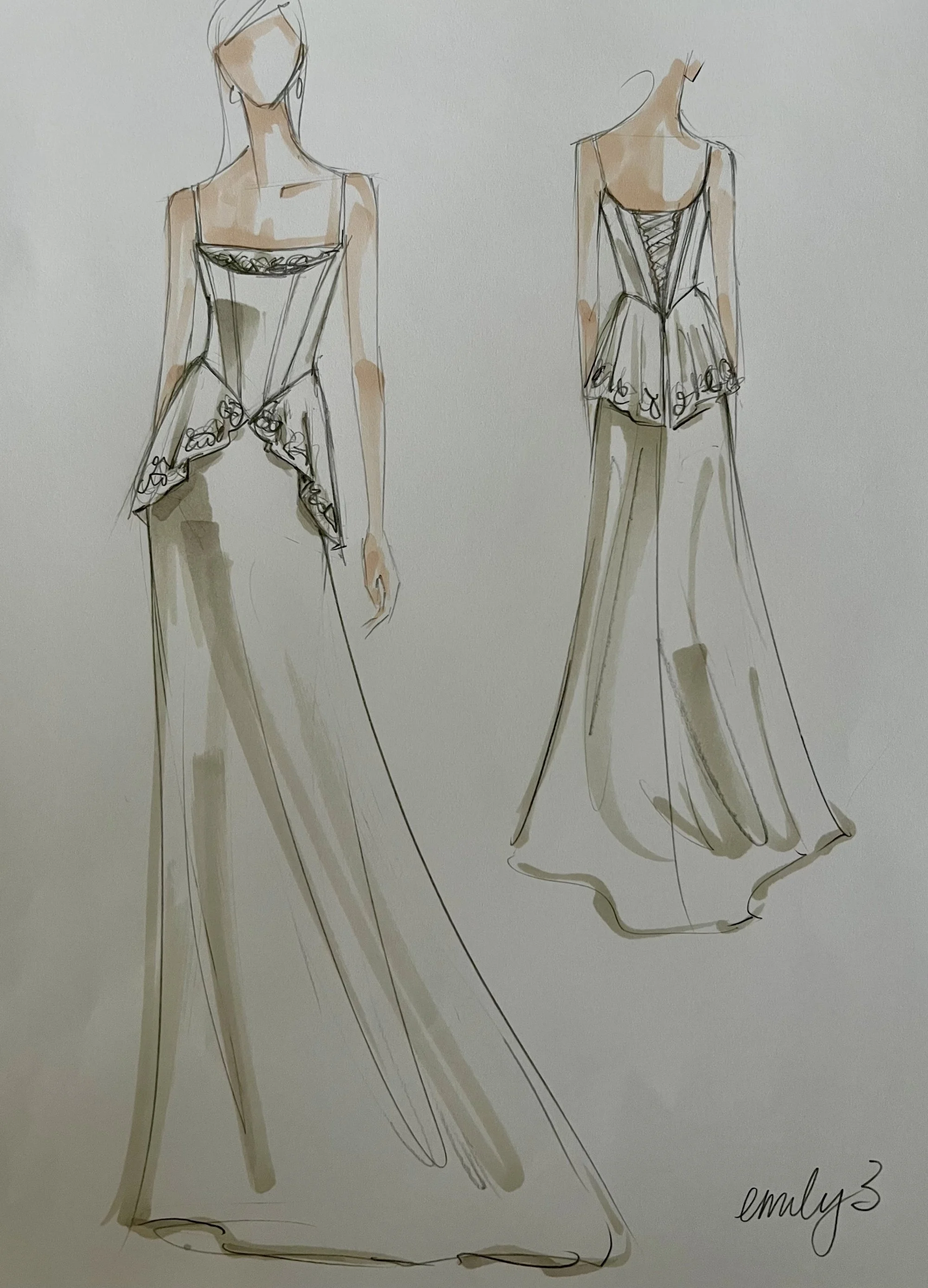
Emily arrived with inspiration images, which we used to tear from magazines and now pin to boards. Her taste was clear. She was drawn to an elegant neckline, flat spaghetti straps, and something with the clean, lifted grace of a ballet neckline.
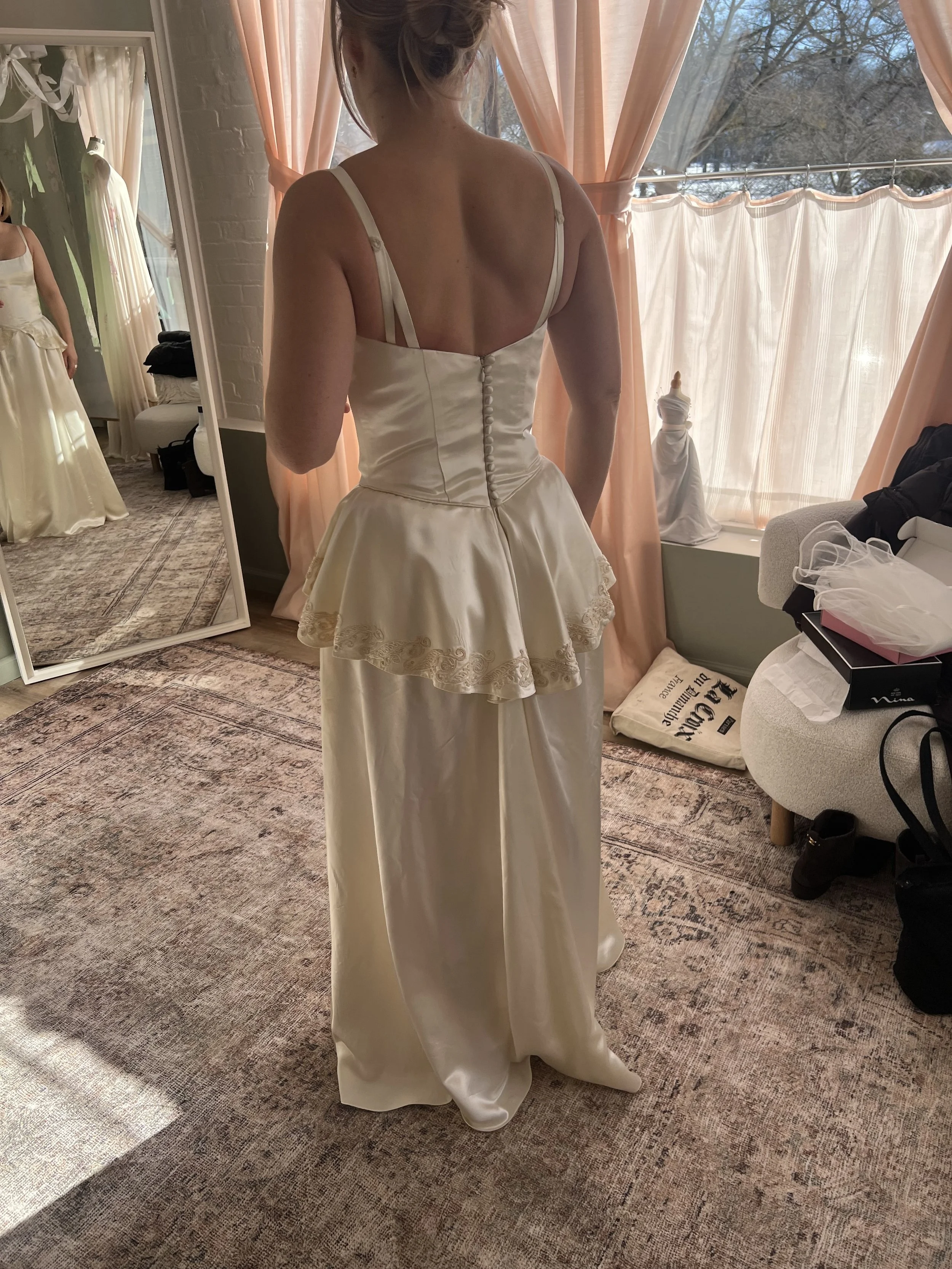
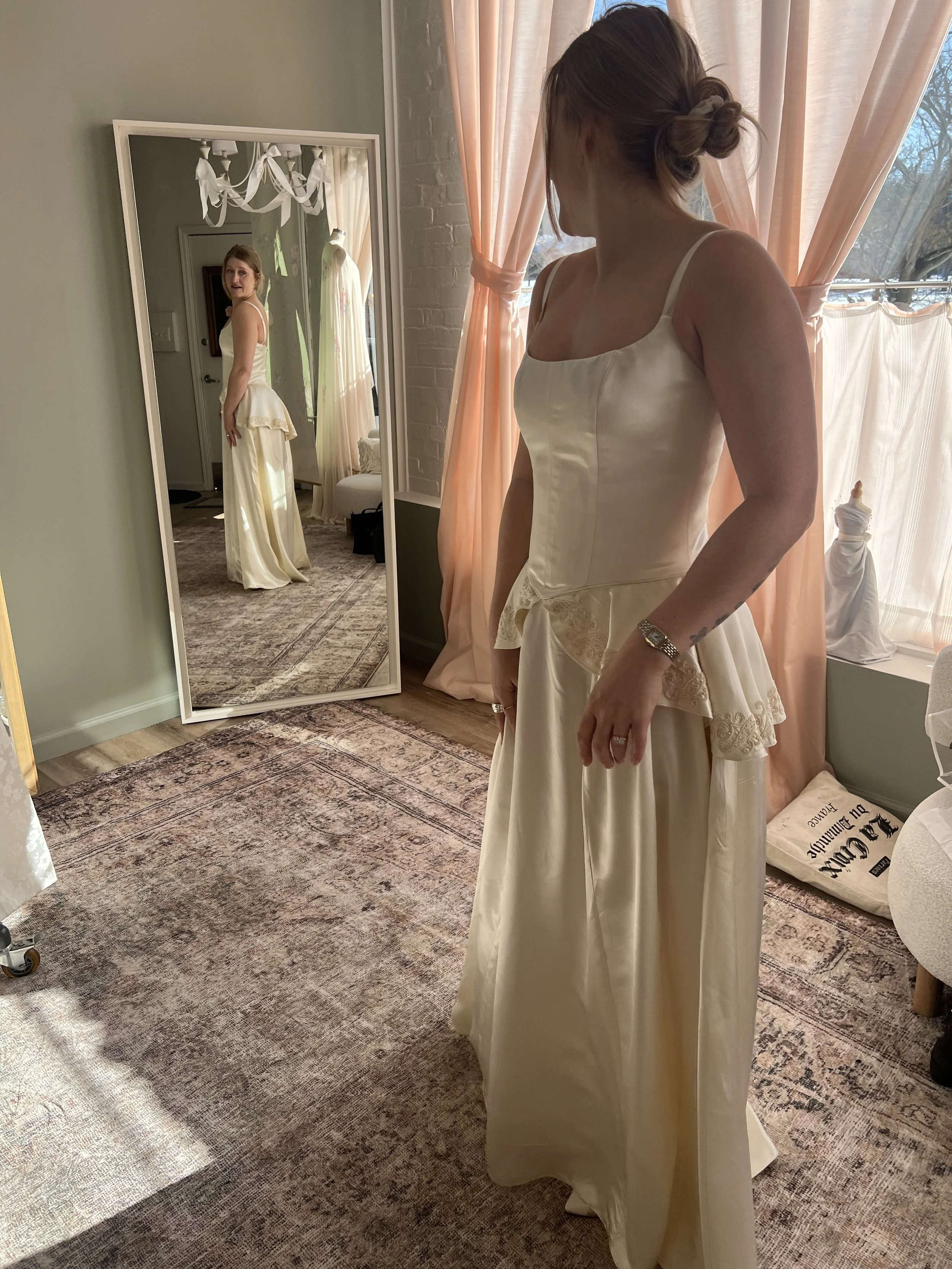
She also knew she didn't want a long train. That turned out to be the key to everything. By removing the train, we freed up a good half yard of original 1940s satin, enough to cut an entirely new bustier from the dress itself. We placed every pattern piece around the fading and age spots, so only the best of the satin made it into her bodice. Nothing new, nothing borrowed from another gown. Every inch of Emily's bodice would come from her own dress.
From Sketch to Muslin
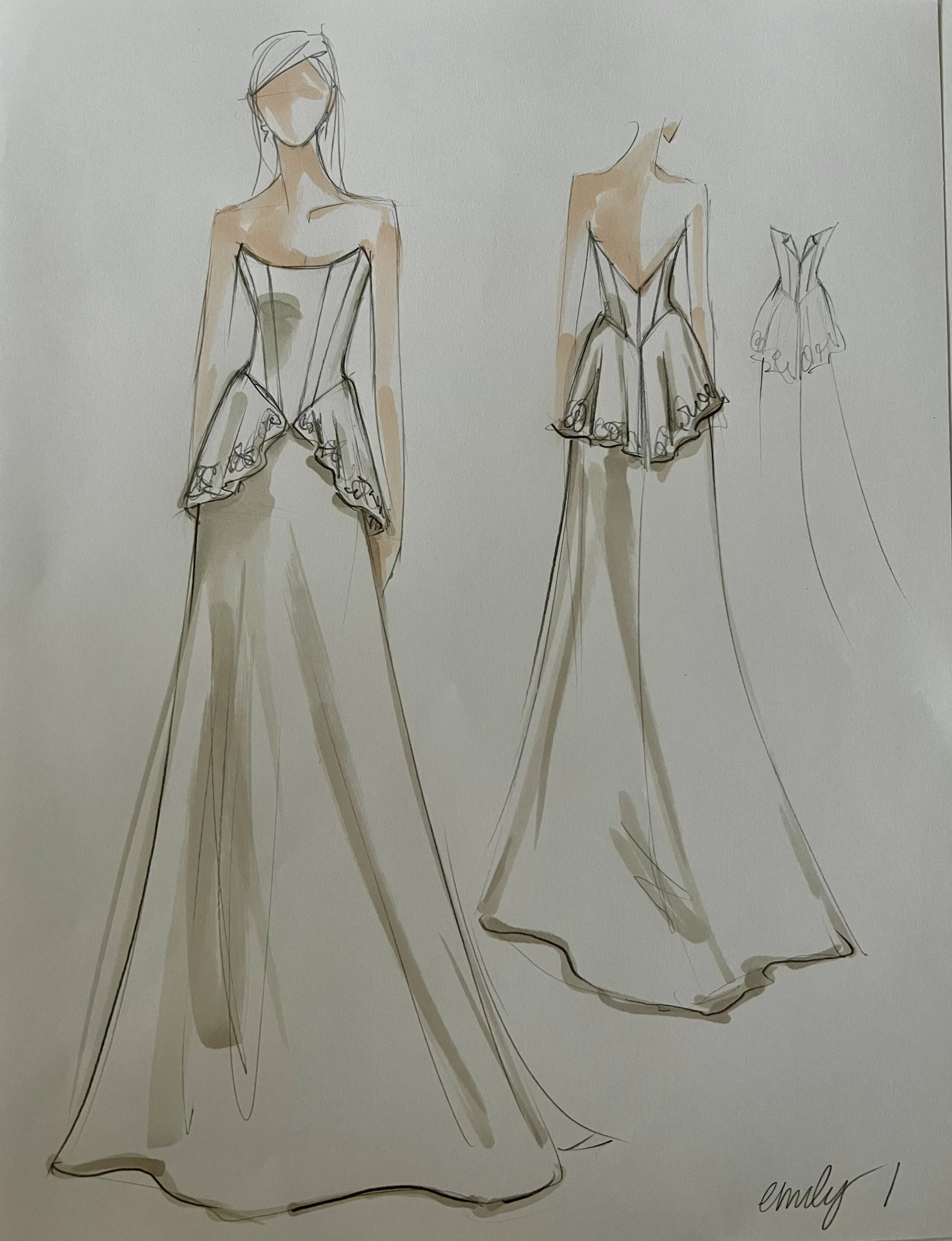
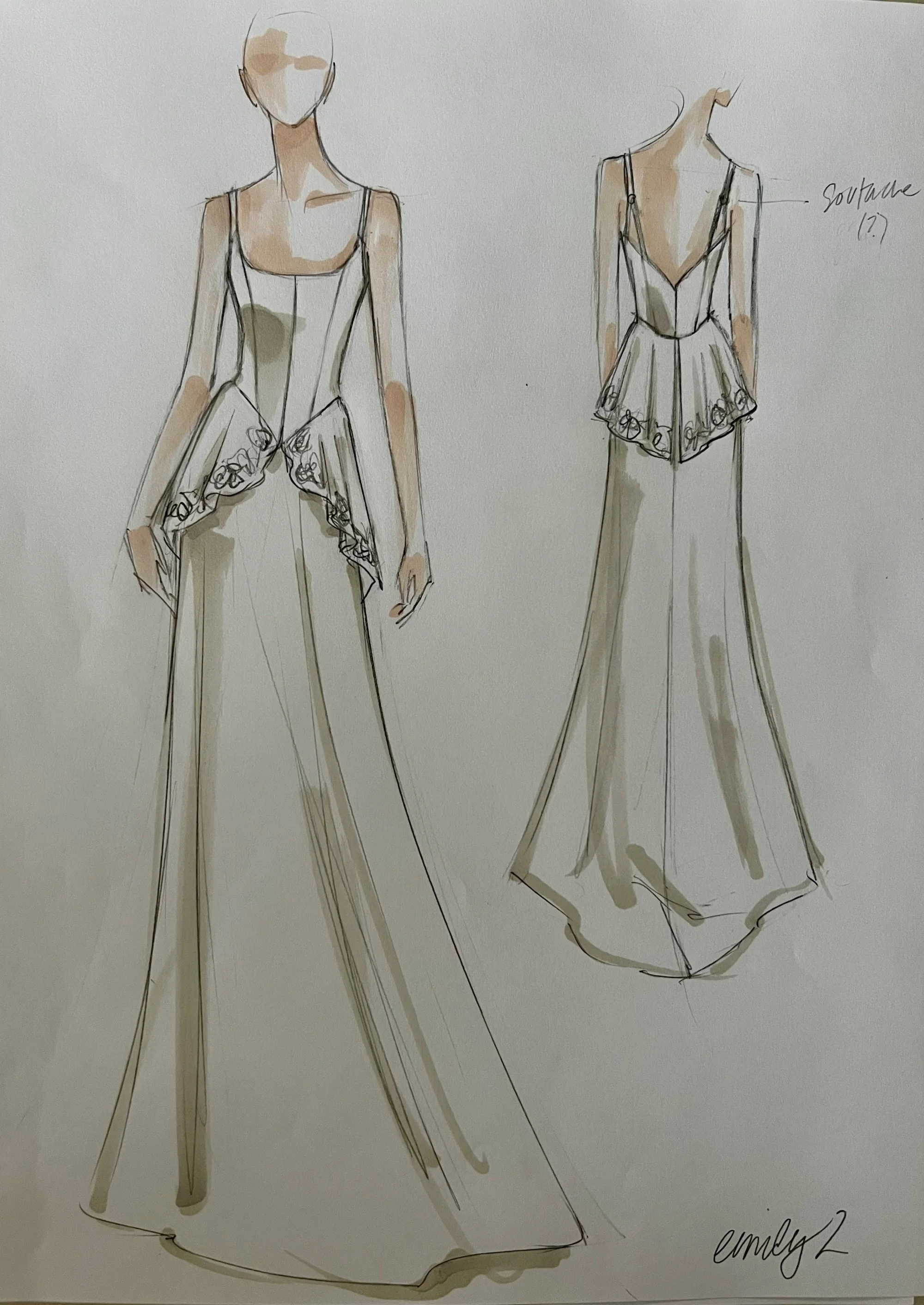
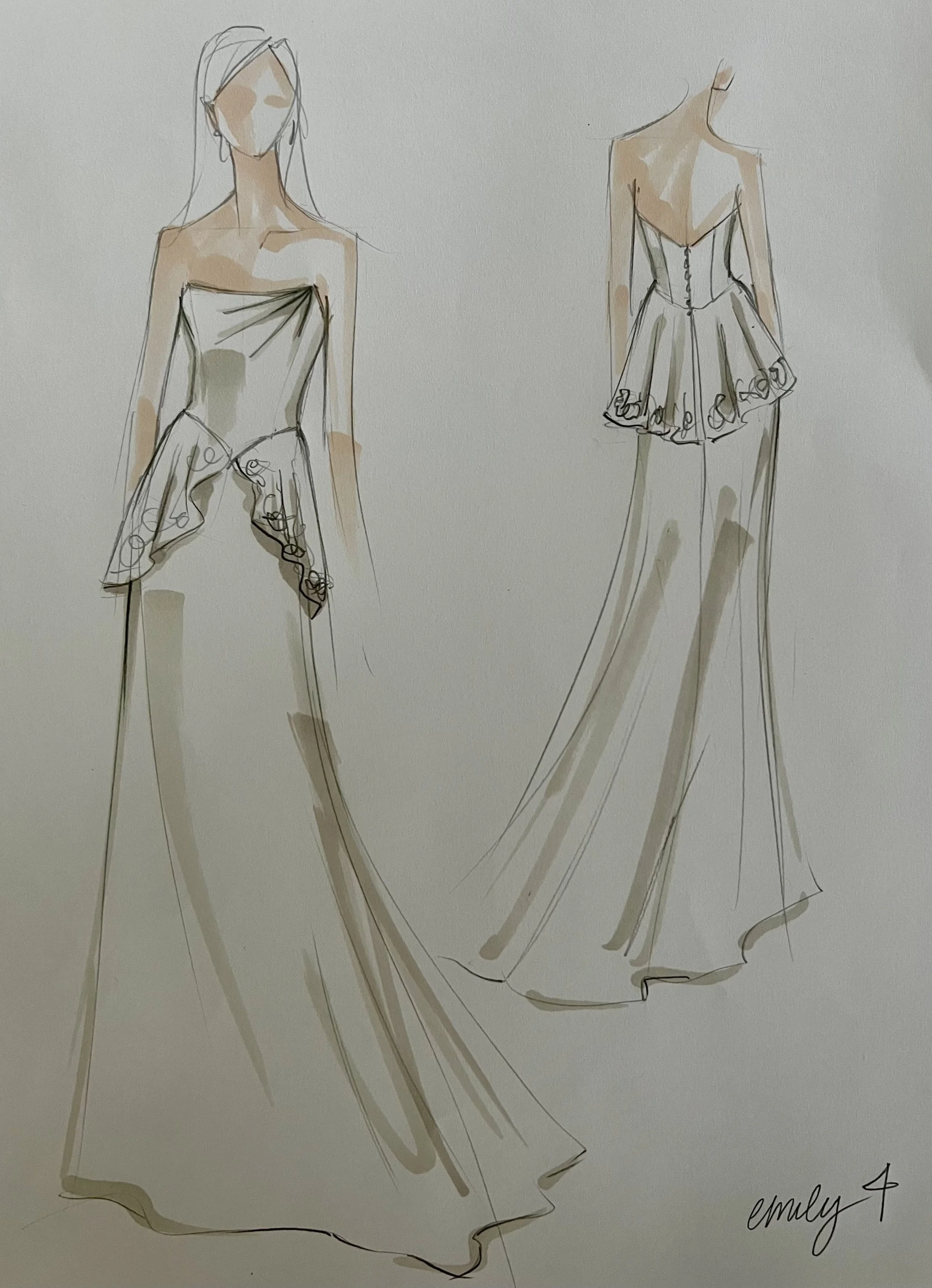
After our first meeting, I drew four sketches for Emily. Two were what she had described and based on her inspiration, and two were my own creative spins, versions she hadn't imagined were possible. I had taken her measurements at that first appointment, so the moment she chose her design, we could begin.
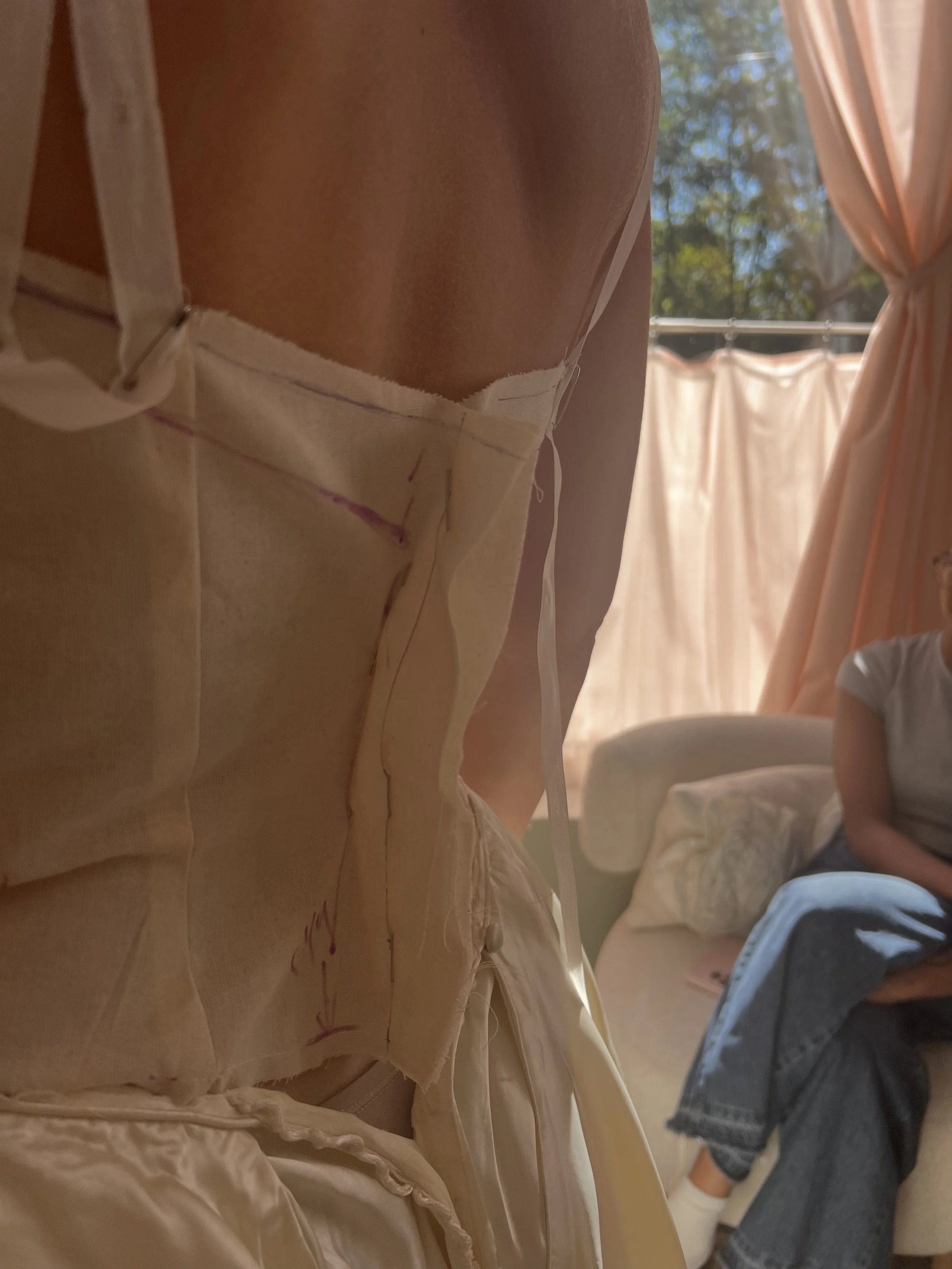
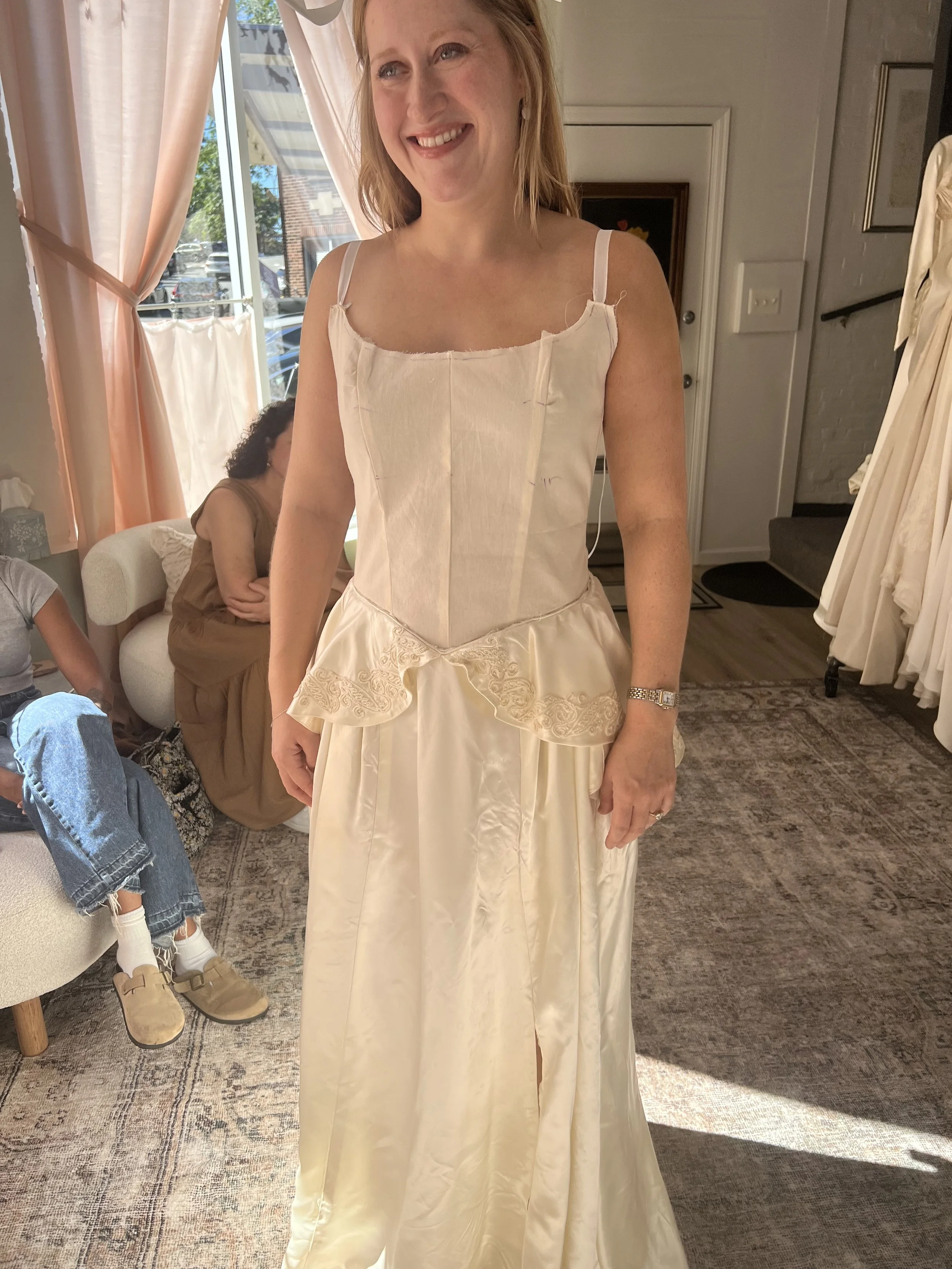
My pattern maker, Kate, drafted a new pattern for the bodice. Before we touched the satin, we made a muslin, a test garment in plain cotton, so we could perfect the fit. We took it in here, tightened it there, and marked the exact length of the straps. With vintage fabric, there is no second chance, so every adjustment happens in muslin first.
That muslin fitting became something special. Emily brought her mother, her 93-year-old grandmother, and her future sister-in-law. In Emily's words, "It felt more like an intimate gathering than an appointment." Trying on what she called a "prototype" let her see her dress take shape and share her feedback before a single cut was made in the satin.
The Work
The original gown was taken apart piece by piece. I fused the satin salvaged from the skirt to give it strength and structure, then cut the new bodice pieces. My seamstress, Ruth, sewed it all together into a fully boned bustier that holds its shape beautifully.
The finishing touch was a nod to where the dress began. We took the buttons from the original gown and placed them on the new one. They are purely decorative now, since a bridal zipper does the real work, but they carry the story of the dress forward. In the sketch Emily chose, I also tucked a small piece of lace into the back flap strap, a quiet detail for anyone watching her walk away.
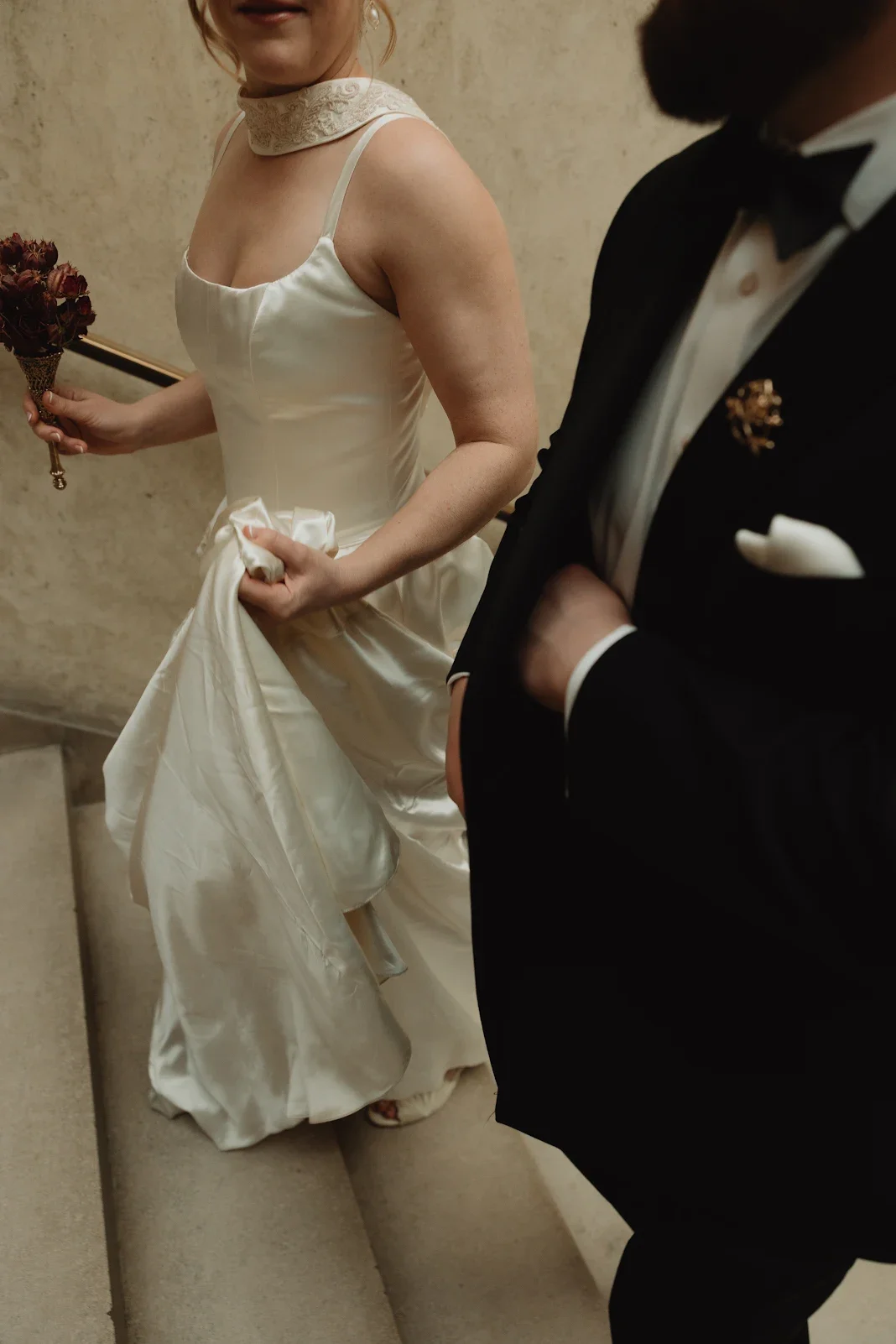
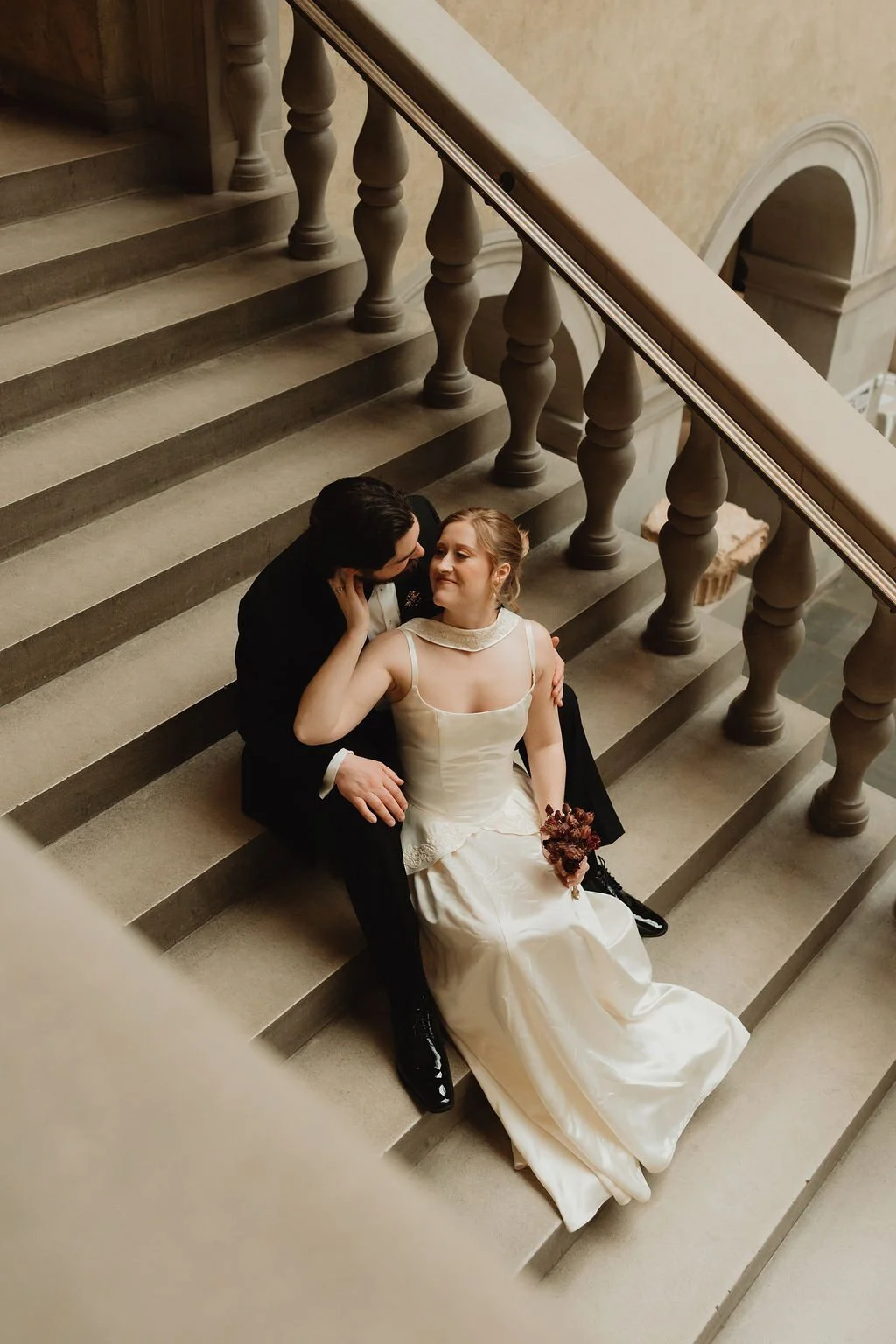
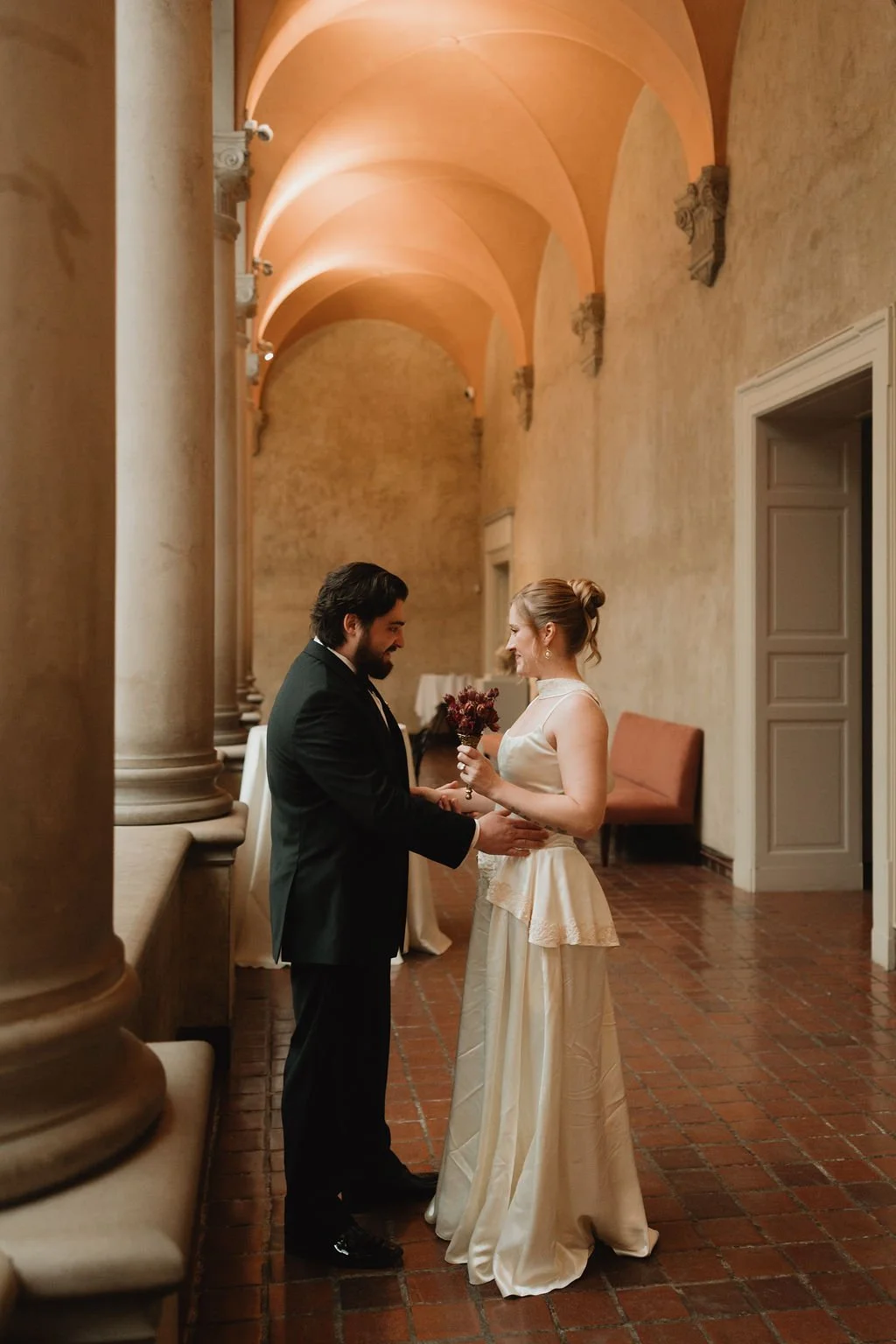
The soutache came with her, too. We kept the original peplum, soutache and all, as part of the new gown. And the soutache from the old collar became a separate scarf, which Emily wore around her neck.
Once it was cut in that 1940s liquid satin, it looked absolutely gorgeous.
Her Day
Emily married at the Worcester Art Museum, and it was perfect. Surrounded by art, in a gown that had lived one life already and was now living another, she was the work of art.
Looking back on the process, Emily said I "not only brought my vision to life but also made it even better than I could've imagined." There is no higher compliment for a designer.
And her advice to other brides: "If you find yourself like I was—looking at dresses in shops and feeling like they all looked the same, then I hope you also take the leap and try a path like this!”
Do you have a family gown, or a vintage find of your own, waiting for its next chapter? Book a complimentary consultation, and let's imagine what it could become.